Yukki Yaura
NATURAL HISTORY
Yukki Yaura
NATURAL HISTORY

Wild-life exhibition at the Natural History Museum, London
Solo E-maki exhibition at Nature In Art Museum, Gloucester
(Emaki works 20 volumes including Japanese endangered animals)
Christie’s Auctioneer, London
Society of Wildlife Artists the Mall Gallery, London
London Zoo exhibition, London
The Environmental Art exhibition KPMG, London
East African Wildlife Art Exhibition, Nairobi
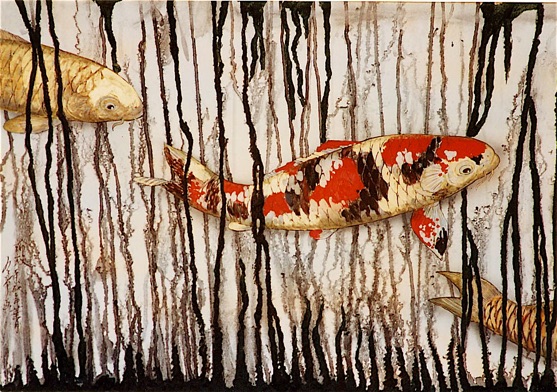
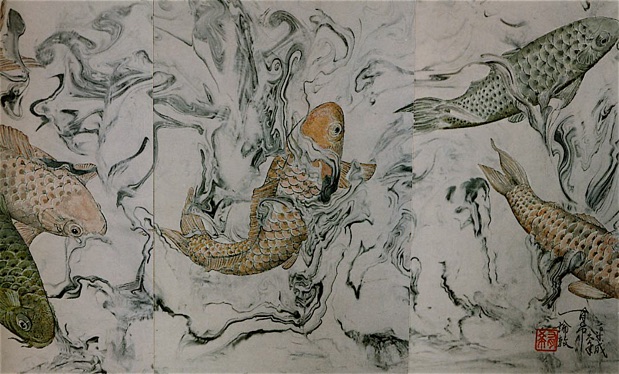
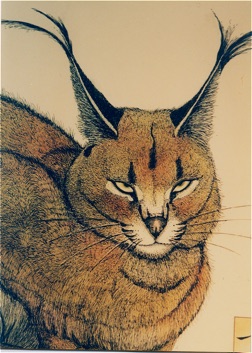
博物画展自然博物館ロンドン
The Natural History Museum, London
Botanical Art
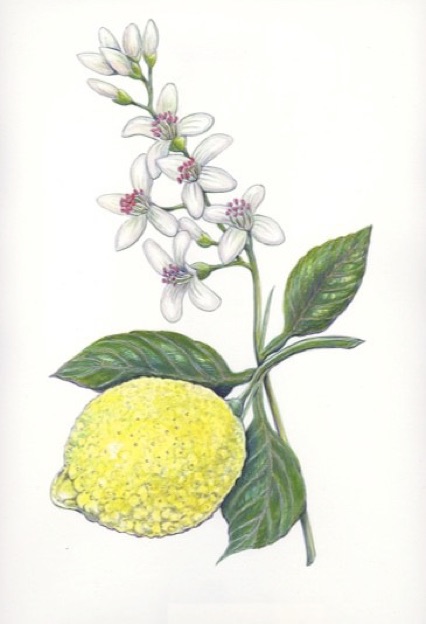
Yukki Yaura
EMAKI
2015
I became interested in the e-maki form at the age of eight, when I made my first painted scroll based on the story of a badger, it consisted of 15cm pieces of paper joined together, with pictures of the badger and text which was then rolled up into a scroll. It took me two days, and after that I made quite a few instant e-maki using the same form. I still have one that from my twenties, which illustrates a Buddhist story called "The Deer Garden" and although the paper is not washi and I used my own method of mounting the paper, it is still true to the e-maki form in essence.
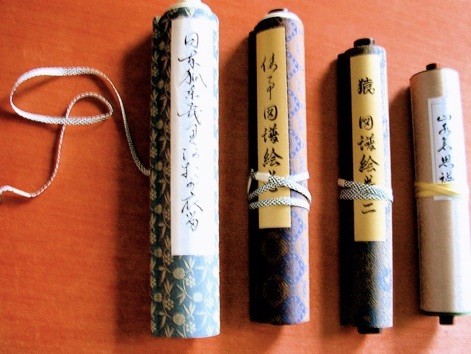
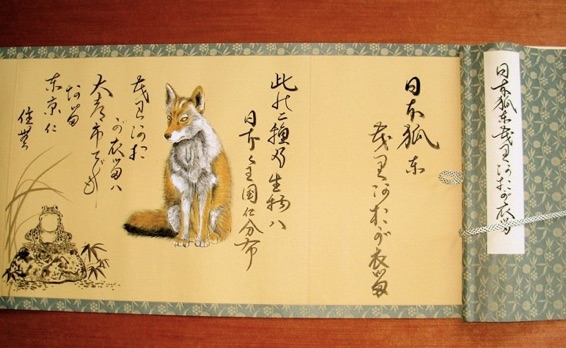

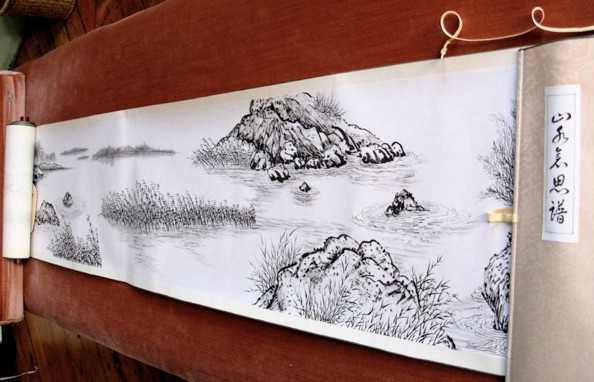


The term e-maki did not exist when the artform first emerged. The word comes from e meaning picture, and maki, which refers to makimono, something in the form of a scroll, to give the meaning of a painting in the form of a scroll. The term makimono referred to scrolls on which only text was printed, such as Buddhist sutras and literary works. The term e-maki is generally only used when pictures are added to the text. Similarly, works such as Sesshu’sSansui-Choka; Hishikawa Moronobu’s Fuzoku-Gaka., and Maruyama Ookyo’s Shichinan-Shichifuku-Zuka. Although these have the makimono form, they are nevertheless not considered as e-maki by Japanese scholars because the art which they contain is not strictly Yamato-e (traditionally Japanese, as opposed to Chinese-style painting). The subjects dealt with are not traditionally portrayed in Japanese-style art. However, just as netsuke and ukiyo-e became popular in the West, the term e-maki has recently become fairly widely used outside Japan. In the West, the term e-maki refers to any work of art which has the horizontal scroll form, and so for example would include works referred to in Japan as gakan.
Most Japanese scholars consider that e-maki no longer existed after the Muromachi era (1338-1573), since they believe that Yamato-e, which was the essential factor in defining e-maki, completely disappeared at this time, and whatever art was produced afterwards could not be termed Yamato-e. In other words, if Yamato-e no longer existed, this meant that e-maki could not exist either. My own opinion is that the e-maki produced in the Edo period (1603-1868) were the most beautiful from an aesthetic point of view. Since the project involves producing new e-maki, my definition of e-maki does not depend on the inclusion of Yamato-e style painting or narrative but refers to any work of art which uses the horizontal scroll form.
In order to explain the connection between e-maki and Japanese wildlife, it is necessary to refer to the culture, geography and philosophy of Japan. Japan is an island slightly larger than Britain, which has Russia to the north, China and Korea to the east, Southeast Asia to the south, and the Pacific Ocean to the west. The north of the country has flora similar to Scotland, whereas the south has a tropical flora climate. Seventy-one percent of Japan’s land is mountainous. It is also a country where the four seasons are very clearly defined.
As for Japan’s philosophy, an animistic belief has existed since the Jomon period (12,000-300 B.C) which still exists today as Shinto. Confucianism came to Japan from China as a subject for study, and Buddhism was introduced, also from China, in the sixth century. Since both these philosophies were compatible with Japan’s indigenous form of ancestor worship, all three beliefs came to exist simultaneously and together shaped Japanese philosophy.
The e-maki form was introduced into Japan at the same time as Buddhism.
At that time, there was a native Japanese style of painting called Yamato-e. In the Heian period (794-1192), the syllabary alphabet or kana system (hiragana and katakana) was developed allowing literature and poetry to flourish and had a considerable effect on Japanese scroll painting. e-maki paintings were used to illustrate literature and stories, and literature flourished greatly at this period as a result of the development of hiragana.. In the year 905 the first Japanese anthology of poems was produced in Japan called Kokinshu.. Before the use of hiragana, poetry was written in kanji Chinese character), but after the introduction of hiragana, it became more widely popular, and people’s attitude towards poetry changed. E-maki, which combined such texts with pictures, became more widespread. The theme of the four seasons was an extremely common subject for literature and poetry.
There are various reasons for the fact that much of Japan’s wildlife survived undisturbed for hundreds of years. Japan did not develop livestock farming as Europe did, and the slaughter of four-legged animals for meat was banned as a result of Buddhist influence, with the main food being fish, rice and vegetables. For this reason, most birds and animals were protected, and since Buddhism teaches that trees and other plants have souls just as human beings do, these were also respected. Also influential was the fact that not only nobles but many Emperors, Shoguns and Daimyo were scientists, authors, poets, and artists and naturalists. Moreover, Japanese people were traditionally pacifist from 200 BC to 300 AD, and very few wars were recorded in the country’s early history and even during later periods, people never fought over religion. As a result, poems were published by anyone who had talent, from an Emperor to a peasant, irrespective of social standing. Even during the Samurai era, makimono flourished. In the Muromachi era, when the influence of Zen was at its peak, Japanese cultural pursuits such as the tea ceremony and flower arrangement became very popular and Yamato-e declined to some extent, but a new style of Japanese painting was developed by the Kano and Maruyama Schools, and many works using the e-maki style were created in the Edo period. By this time, however, printed books were in fashion, and e-maki seemed outdated.
Japan’s isolation during the Edo period was the time when Japanese culture developed its most original and rich forms, including arts such as Kabuki, Noh Bunraku, and Ukiyo-e.. When the period of isolation ended with the Meiji Restoration (1868 ) this had a drastic effect on the nation’s wildlife. When the ban on eating meat was lifted, many Japanese animals (until then no species had ever become extinct in Japan) began to disappear, killed for their meat, skins, fur and feathers. The form is considered to be the forerunner of Japanese manga (comics), which are now popular throughout the world.
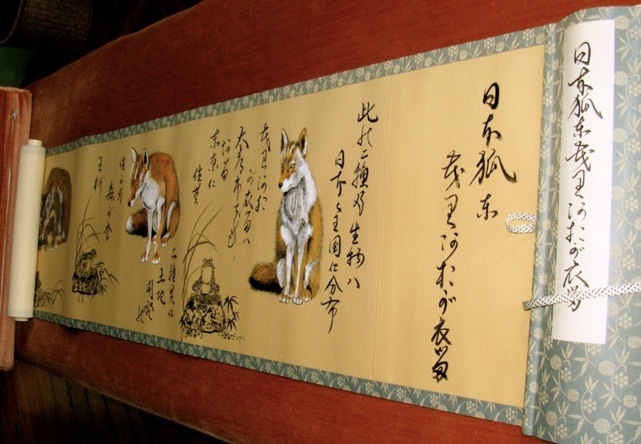
The reason for my interest in e-maki and its historical development is that I saw an opportunity to use this traditional art form as a step towards the conservation of Japan’s wildlife and for raising people’s awareness of nature. The spread of western culture in Japan was accompanied by the destruction of forests throughout the country and Japanese culture also declined. The number of e-maki produced by Japanese artists between the end of the Edo period and the Meiji and Showa eras decreased dramatically. After the Meiji Restoration, education became almost entirely western-style so that in primary schools, water colour painting was taught instead of Japanese-style art, and in music, children learnt to play the piano instead of Japanese traditional instruments. In this way, Japanese culture and wildlife were victims of the same fate, and both suffered after 1868 when the Meiji era began. One hundred years later, I feel that I have a mission to revive both interest emakimono and Japanese wildlife. From 1994 onwards I have been carrying out research in Kyoto, Nara and Tokyo and I would like to develop modern styles of e-maki art which can be developed by people with creative minds and tarented anywhere in the world. Since Japanese scholars tend not to focus on emakimono produced during the Edo period (for reasons outlined above), this area has been relatively neglected and I also hope that my research will help to raise the profile of these beautiful works.